
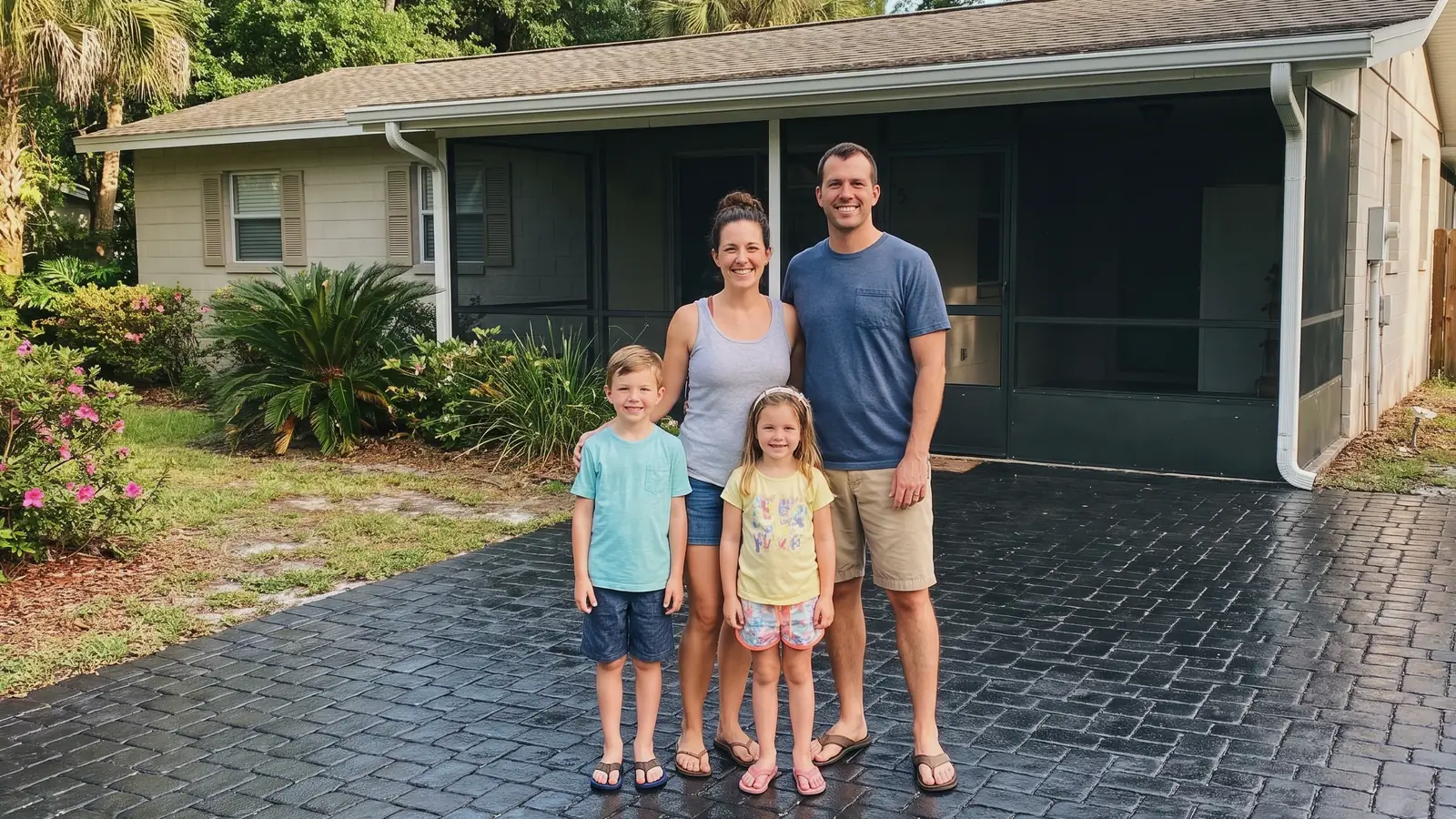
Paver sealing for Downtown St. Petersburg homes
Paver Sealing in Downtown St. Petersburg, FL
Downtown St. Petersburg paved its first brick street in 1904; call (727) 619-2341 for a free paver sealing estimate.
- Brings out deeper paver color
- Fresh joint sand helps lock pavers in place
- Gives weeds less room to grow
- Makes the surface easier to keep clean
- Free estimate, no obligation
Request a Free Estimate
Free, no obligation.
Fast, careful paver sealing in Downtown St. Petersburg
Paver sealing in Downtown St. Petersburg covers the bayfront blocks and the older streets of the Old Northeast. A local contractor answers within 1 business day, usually much sooner, and the first visit is free. For a price, request a free estimate.
A chalky patio with green creeping into the joints and sand draining away near the steps is easy to fix. Washed, re-sanded and recoated, it reads as one even color again. Call (727) 619-2341 and say what you see.
The area ranges from a tight courtyard behind a 1920s building to a wide driveway on a leafy block. Each job is priced on its own square footage and condition. The decision stays with you, so request a free estimate to see a number.
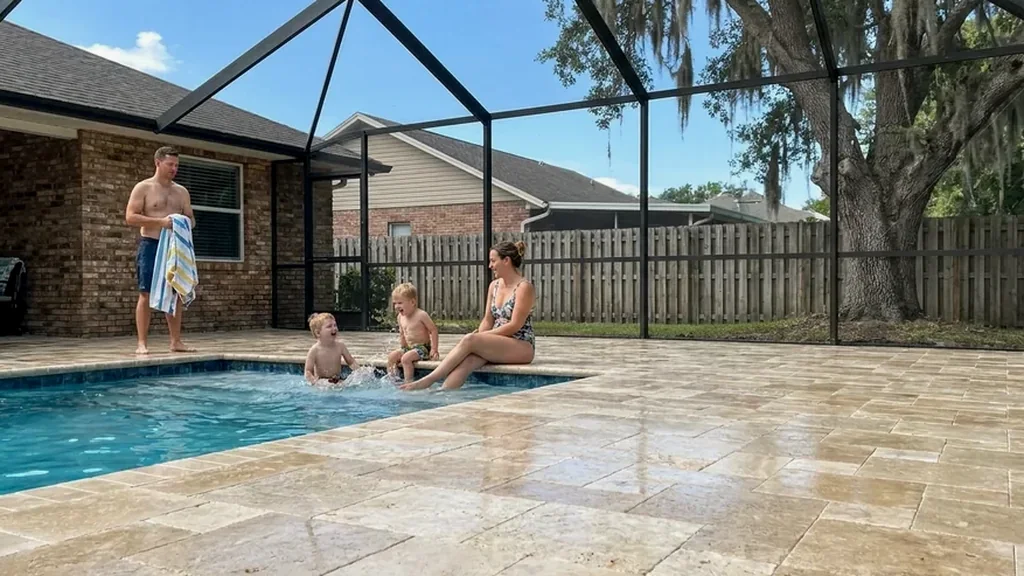
Why hire a local paver sealing contractor in Downtown St. Petersburg?
Historic districts, brick streets and the bay make downtown pavers a mixed lot. A contractor who works here reads each one. To find out about yours, request a free estimate.
A visit before a price
Your Downtown St. Petersburg pavers are examined up close, and the figure follows.
Masking before water
Curbs, doors and plants are covered before any washing starts, so brick and stone edges stay clean.
Care at brick and curbs
The city protects 92 miles of brick roads and alleys, so wash water and sealer should stay off them.
Finish and day are yours
Choose matte or wet look and pick the date. Wet look shows scuffs sooner, and an estimate carries no obligation.
Get Your Free Estimate in Downtown St. Petersburg
Tell us about your pavers in Downtown St. Petersburg.
Free, no obligation
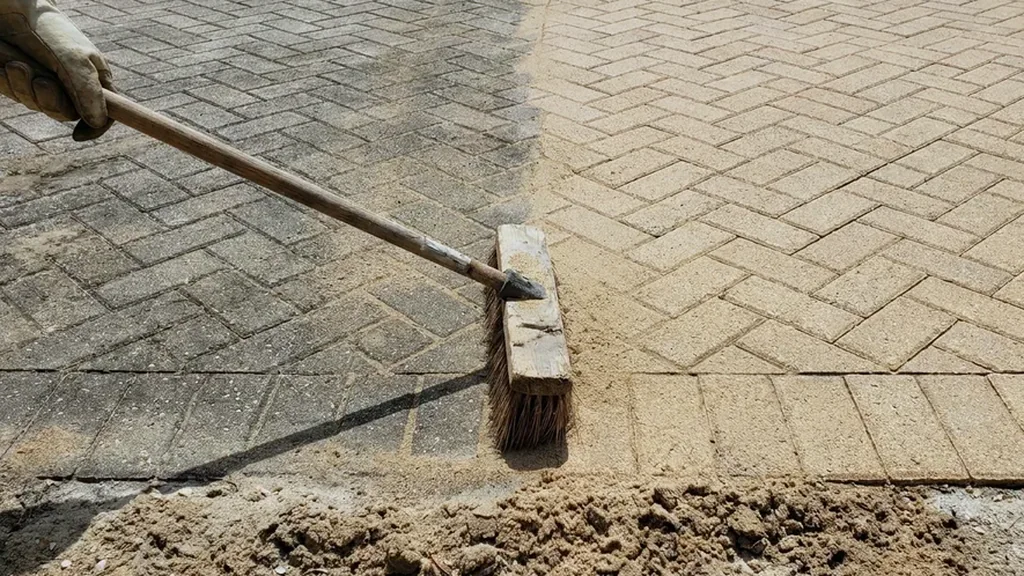
What paver problems show up most in Downtown St. Petersburg?
Sun on 361 days a year
Wikipedia says St. Petersburg averages 361 days of sunshine a year, and Guinness recorded 768 sunny days in a row between 1967 and 1969. Downtown courtyards and open drives take that light for hours at a stretch. Bare pavers bleach slowly, and a coat thins with them. Look for a patch that stayed dark where a planter or car sat, since it shows how much the rest has faded. Ask the contractor to try a matched finish on a small area, then judge the difference yourself. Straub Park runs nearly half a mile beside the water, a reminder of how much open sky this part of the city has.
Salt air near the bayfront
Beach Drive runs along the water, and the Pier juts about half a mile into the bay. A St. Petersburg paver company says driveways near the water age faster than northern ones, with UV, salt air and rainy-season dampness all working against the coat. Pavers a few blocks from the bay may still need a sooner check. Walks and patios close to the water can also stay damp longer after rain. Ask whether a freshwater rinse is part of the plan for pavers this near the bay.
Rain that takes the sand
The city averages 52.48 inches of precipitation a year, and hard rain pulls sand out of paver joints. A landscape trade group says joints that lose sand open up, let soil in and invite weeds. New sand goes in right after the wash and ahead of any coat, so the sealer can hold it. Look where a downspout empties or along the edge of a courtyard, since sand leaves there first. Run a coin along a joint near the downspout, and if it sinks, mention it at the estimate. The steps are worth a look too, because running water reaches those joints first.
Pavers beside brick streets and old curbs
St. Petersburg laid its first brick road along Central Avenue in 1904, and the city now protects 92 miles of brick roads and alleys. A 1992 policy also bars removing granite curbs. A job beside one of these needs care. The contractor keeps wash water, sand and sealer from spilling onto the street, which means the edge is masked and rinsed with attention. Ask how the contractor plans to protect the street edge, since that tells you how careful the crew will be on the rest of the job. Walkways that cross a brick street edge get the same masking.
A coat nobody can name
The downtown district holds 367 historic buildings and the Old Northeast holds 2,975, so many properties here have passed through several hands. Nobody may know which sealer sits on the courtyard. That matters because the two sealer families will not layer: a water-based product fails over a solvent-based one. Flaking at the corners or a cloudy patch in the middle are the usual signs. A trial spot in a corner nobody sees gives the answer before the whole courtyard is coated.
Can homes in the Old Northeast and the Downtown St. Petersburg core both get paver sealing?
Yes, because a contractor works by address and not by neighborhood label. The Downtown St. Petersburg Historic District was listed in 2004 and runs along 5th Avenue North, Beach Drive NE, Central Avenue and 9th Street North. The Old Northeast, listed in 2003, reaches from 4th Street North to 30th Avenue North. To get on the schedule, request a free estimate.
Downtown holds the Snell Arcade, the Princess Martha Hotel and the Alexander Hotel, while the Old Northeast includes the Palladium Theatre in a church built in 1925. Courtyards and entries near those blocks can be sealed too. Call (727) 619-2341 and name the street nearest you.
Central Avenue carries dining west to 34th Street, and Straub Park runs nearly half a mile along the water. Homes and buildings between them vary a lot, so the contractor looks at each lot on its own. With 19,137 residents counted in ZIP 33701 in 2020, there are many entries and patios to see. Use the form to request a free estimate and pick a time.
Mirror Lake is where the city's first library opened in 1915, and the Vinoy Park Hotel stands on the bayfront. Properties near either landmark are visited like any other, by address. Name the landmark nearest you when you request a free estimate.
The Pier juts about half a mile into the bay, and Beach Drive runs along the waterfront with restaurants. Properties along that edge get the most open water. Say if yours is on the bayfront when you request a free estimate.
The Old Northeast holds 2,975 historic buildings and is mostly residential, while the downtown district covers about 420 acres with 367 historic buildings. If you are unsure whether any exterior rules apply to your property, ask the city before choosing a finish. Then request a free estimate and talk through a plan.
The downtown district also lists the St. Petersburg Coliseum and the First United Methodist Church among its contributing properties. Courtyards and walks near buildings like these are visited like any other, by address. Say which block you are on when you request a free estimate.
What does paver sealing cost in Downtown St. Petersburg?
Published Tampa Bay rates of $1.00 to $1.75 per square foot cover the wash, new sand and seal, so a 300 square foot courtyard comes to about $300 to $525. Size matters, and so do missing sand, growth and an old coat. For a figure that fits your pavers, request a free estimate.
Not every downtown job costs the same. A courtyard behind a gate or a narrow side path takes hand work, while an open driveway goes quickly. Pool decks and entries are added to the measure. Call (727) 619-2341 to learn which of these touch your price.
Listing every surface you want done, from the entry steps to the courtyard, helps the figure make sense. Courtyards add carrying and masking time. Call (727) 619-2341 to go through your Downtown St. Petersburg surfaces.
| Paved area | Typical example | Clean, sand and seal |
|---|---|---|
| 300 sq ft | Small patio or walkway | $300 to $525 |
| 600 sq ft | Two car driveway | $600 to $1,050 |
| 1,000 sq ft | Large driveway or pool deck | $1,000 to $1,750 |
| 1,500 sq ft | Driveway plus pool deck | $1,500 to $2,625 |
Math based on the $1.00 to $1.75 per square foot that Tampa Bay paver companies publish. Your contractor sets the actual price after seeing the surface. Repairs, leveling and stripping failed sealer are usually extra.
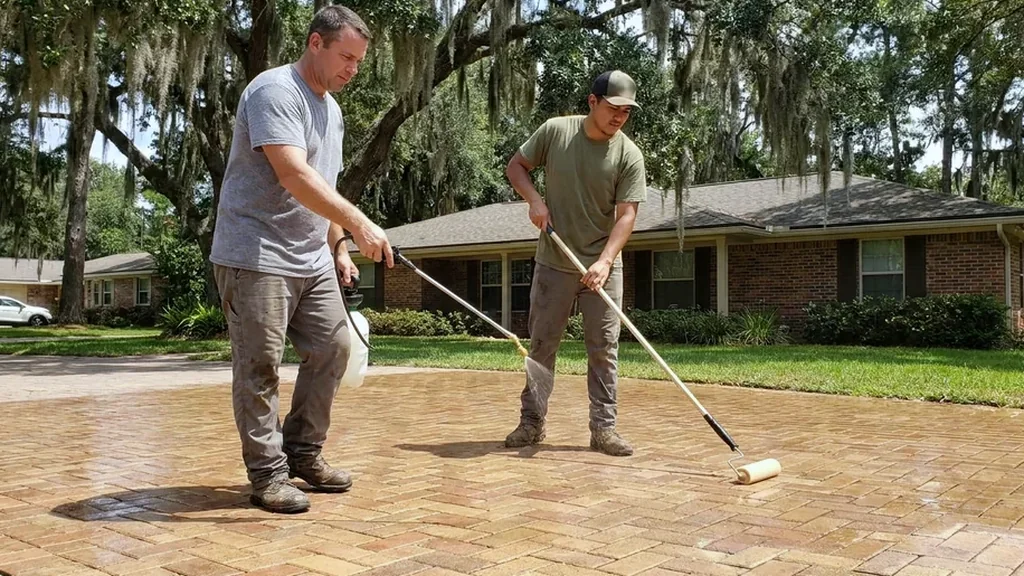
How does a paver sealing job work in Downtown St. Petersburg?
Walk the lot and read the edges
Sun, shade and the edges beside brick, curbs and walls are noted on the walk. Sunken pavers are marked for repair and shifted edges are re-secured. The old coat is checked for peeling, and the area is measured for a firm square footage.
Mask, then wash
Curbs, doors and plants are protected before any water flows. The wash lifts dirt, green growth and old film from faces and seams, and sprinkler rust gets its own treatment. Rinse water stays off the street.
Hold for a dry surface
Bay air and shade between buildings can slow drying. A coat over damp pavers can turn cloudy, so the contractor would rather move the date than rush it. Unilock says trapped moisture or a second coat applied too soon can leave a whitish film, so patience is built into the schedule.
Fill the seams again
New sand goes in once the surface is dry, since washing took the old sand out. Full seams keep pavers in place and leave weeds little room, and loose grains are brushed off before the coat.
Seal and set the wait times
An even coat goes on in the matte or wet look you chose. Written times for walking and for parking come next, shaped by the product and the weather. Unilock and Belgard both point to every three to five years before the next coat.
Complete paver services in Downtown St. Petersburg
Masking comes before any water downtown. Curbs, doors, planters and brick edges are covered, repairs are made, and only then do the wash, sand and sealer follow. A coat keeps whatever shape it finds, so lifted pavers are fixed first. Ask about each stage when you request a free estimate.
Courtyards and driveways collect oil drips. Belgard says to soak a fresh spill up with something absorbent, like kitty litter, and not to rub it in. Old stains get a cleaner made for them before any sealing. Call (727) 619-2341 and describe yours.
Wire brushes are out. Unilock says they can leave metal particles that rust on the surface, so a soft brush and a mild cleaner do the work. Ask what the contractor uses on old brick, stone and curbs. You can request a free estimate to raise it.
Sealer will not take on a damp surface, and bay air can slow drying. A St. Petersburg paver company says a seal there typically lasts 2 to 4 years, which sits close to the two to five that companies quote. To plan a clear day, call (727) 619-2341.
Questions to ask before you hire
- Will the written price show a cost per square foot for each area?
- What happens to the weeds and moss in the joints before the new sand goes in?
- How do you protect my screen cage and pool equipment during the wash?
- Is a slip resistant additive an option for my pool deck?
- Will you point out cracked or sunken pavers before any work starts?
- Can you test a small corner first so I can choose between matte and gloss?
- Can you tell whether an old coat of sealer is still on my pavers before you decide to strip it?
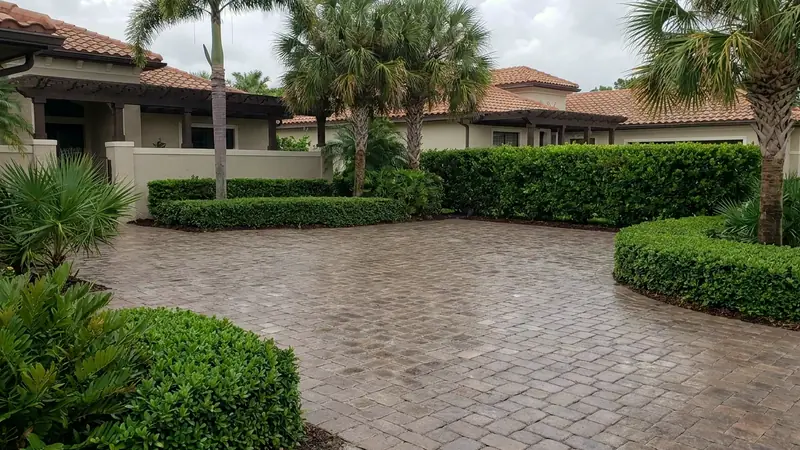
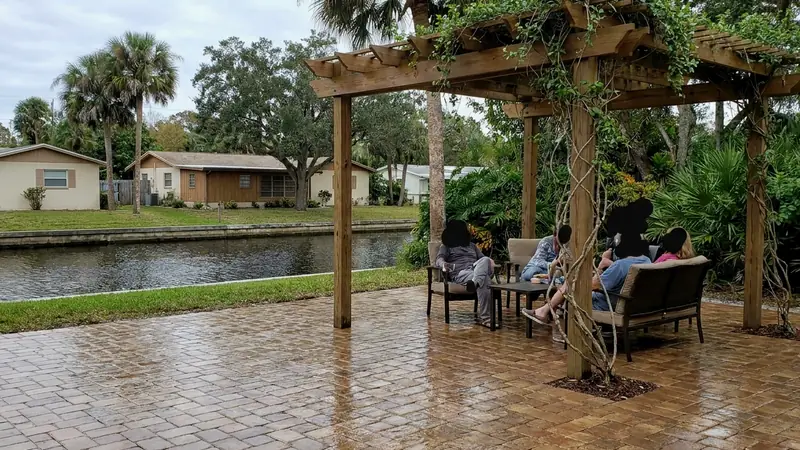
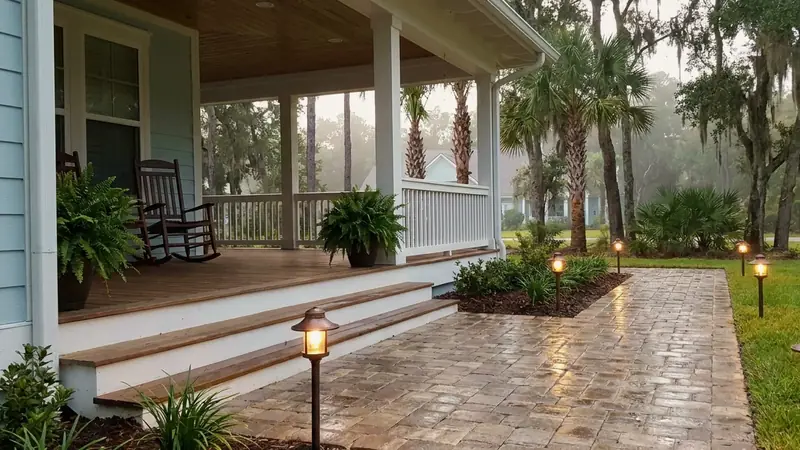
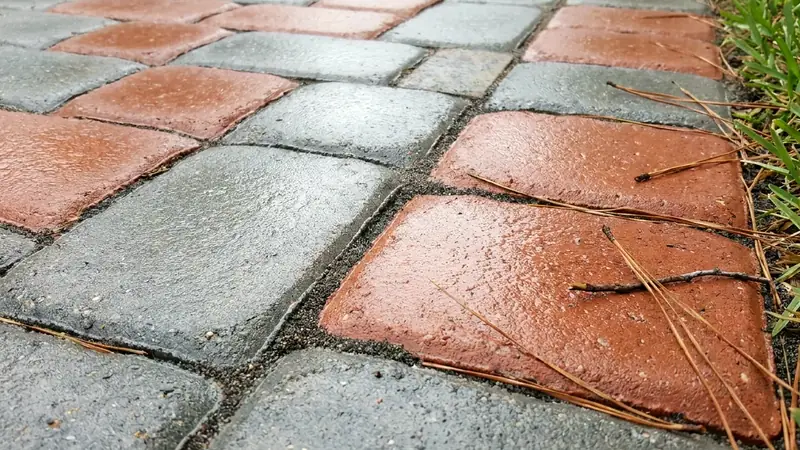
What do sealed pavers look like around Downtown St. Petersburg?

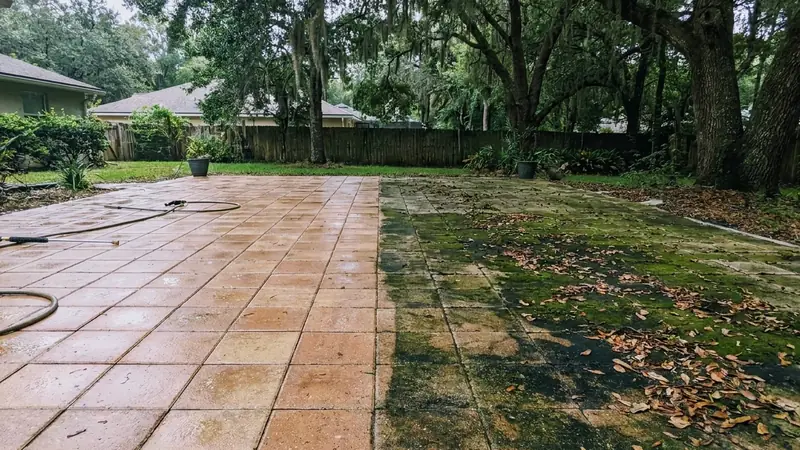
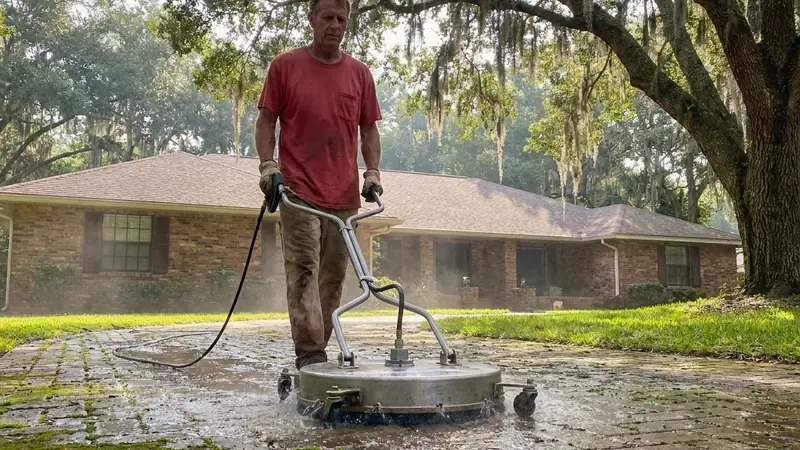
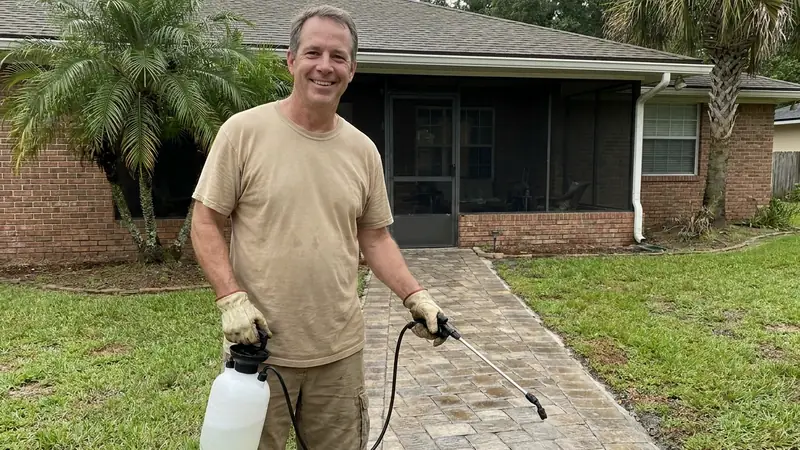
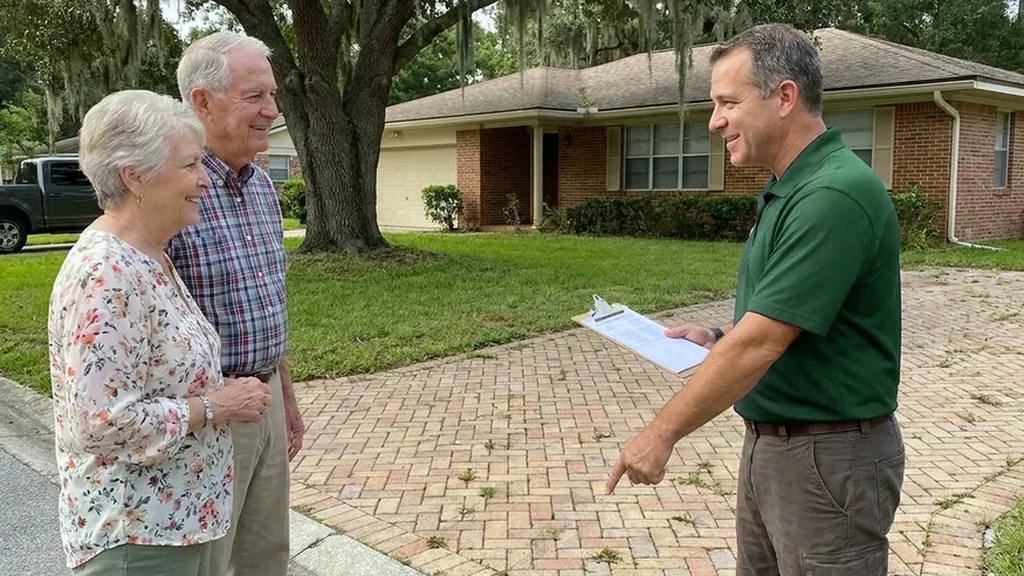
Why local matters in Downtown St. Petersburg
Two historic districts, brick streets and a bay edge all sit within a short drive downtown. A contractor who works here every week knows where extra care is needed, which can change the plan from one block to the next. To talk through yours, request a free estimate.
St. Petersburg began as a town in 1892 with about 300 residents. A contractor who knows its streets can place your address quickly and plan around parking and gates. Call (727) 619-2341 with your block.
Parking and gate access shape a downtown visit more than the weather does. A contractor who works these blocks plans around both, and tells you what to move beforehand. To set up the visit, request a free estimate.
The downtown district covers about 420 acres and holds 367 historic buildings, and the city protects 92 miles of brick roads and alleys. Care at the edges is part of the job in Downtown St. Petersburg. Ask how curbs and brick will be covered when you request a free estimate.
How did Downtown St. Petersburg get its brick streets, and do they matter to my pavers?
They began in 1904 on Central Avenue and spread across the city, and they matter mostly for care at the edge. A 1910 council resolution called for 75 miles of brick, and by 1928 the city had 213 miles. Today it protects 92 miles of brick roads and alleys, along with the granite curbs beside some of them. To ask how that affects your block, request a free estimate.
Downtown also holds Mirror Lake, where the city's first library opened in 1915, and Straub Park beside the water. The Orange Belt Railway reached the area in 1888, and the town was incorporated in 1892. Pavers here sit in the middle of that history. Call (727) 619-2341 and a contractor will take a look at yours.
Peter Demens brought the Orange Belt Railway terminus to the area in 1888, and the town was incorporated on February 29, 1892, with about 300 residents. From that small start the city grew into the downtown you see today. A free look at your pavers starts with a call to (727) 619-2341.
The Alexander Hotel, the Princess Martha Hotel and the Snell Arcade all sit inside the downtown district. Properties near them are visited like any other, by address. To book a visit, call (727) 619-2341.
Guinness recorded 768 consecutive sunny days in St. Petersburg between 1967 and 1969, and the city still averages 361 days of sunshine a year. Pavers in open sun take that all year. Ask which sealer carries UV protection when you request a free estimate.
A 1992 policy stops further paving of brick streets and alleys and bars removing granite curbs. A crew that masks the edge before washing keeps water and sealer off them. Ask about masking when you call (727) 619-2341.
The bricks on the Augusta Block were made in Georgia, and the city treats its brick streets as something to keep. Where a driveway apron meets one, the wash is kept from sending grit across the road. Ask how the contractor handles that edge when you request a free estimate.
Frequently Asked Questions
What do published rates say about sealing pavers in Downtown St. Petersburg?
Published rates around Tampa Bay start at $1.00 and top out at $1.75 per square foot to clean, sand and seal. A Downtown St. Petersburg total depends on size, missing sand, growth and the old coat. The first visit is free, which gives you a figure for your own pavers.
How much does it cost to seal outdoor pavers in Downtown St. Petersburg?
The same published range of $1.00 to $1.75 per square foot covers the wash, fresh joint sand and the coat. Repairs to sunken pavers are separate, so ask about them at the visit. A courtyard behind a gate may cost more per foot than an open drive.
What are the downsides of sealing pavers?
A wet look scuffs visibly sooner than matte, and a coat cannot go over a damp surface. Sealer also wears out, and one local company says a seal typically lasts 2 to 4 years there. The old product matters too, because a solvent-based coat rules out a water-based sealer on top.
What is the average price to seal pavers?
In this region, companies publish $1.00 to $1.75 per square foot. Your price rides on the area, the shape the pavers are in and how easy the property is to reach. Get the total in writing so you can hold it against that range.
Do pavers near brick streets in Downtown St. Petersburg need special care?
They need care at the edge. The city protects its brick roads and granite curbs, so the contractor masks the border and rinses with attention. Ask how wash water and sealer will be kept off the street, and what will be used to mask it.
Will sealing hide orange rust marks on my Downtown St. Petersburg patio?
Not by itself. A coat over rust holds the stain, so the contractor removes it before sealing. Iron in irrigation water is a frequent source of orange streaks. Aim sprinkler heads away from the patio to keep new ones off.
How often should pavers near the bay be resealed?
Expect to hear two to five years from companies as the span between coats. A local paver company says driveways near the water age faster than northern ones. Check your coat sooner if you are close to the water, and sprinkle some water on it to see whether it beads.
Will I get an answer quickly if I ask for a price?
Anyone who asks gets a reply within 1 business day, usually much sooner. Getting the estimate is free, and saying no is fine. Ring the number above or use the quote link.
How long before I can walk on a sealed courtyard in Downtown St. Petersburg?
Unilock says to keep the area dry for up to 48 hours and to keep foot and vehicle traffic off while the coat cures. The exact wait depends on the product, so ask the contractor for it in writing. Sprinklers stay off during that time. Plan any event or delivery around it.
Can a new courtyard in Downtown St. Petersburg be sealed right away?
No. Unilock says new pavers should wait 60 to 90 days after installation so the white haze called efflorescence can clear. Sealing over it locks the salts in. Mention the install date when you ask for an estimate.
What cleans algae and mold off pavers before sealing in Downtown St. Petersburg?
Unilock names white vinegar for mold and a soft bristle brush for stubborn spots, with mild detergent and water for general dirt. Wire brushes are out, since they can leave metal particles that rust. The surface then has to dry fully before any sealer goes on.
Will a sealed courtyard in Downtown St. Petersburg be slippery when wet?
A glossy finish can be, according to Unilock, which is why a test corner is worth doing before the whole area is coated. A calmer matte sheen gives more grip underfoot. Walk the test corner wet before you decide.
Ready for a Free Estimate in Downtown St. Petersburg?
Call (727) 619-2341 and tell us about your pavers.
Free, no obligation